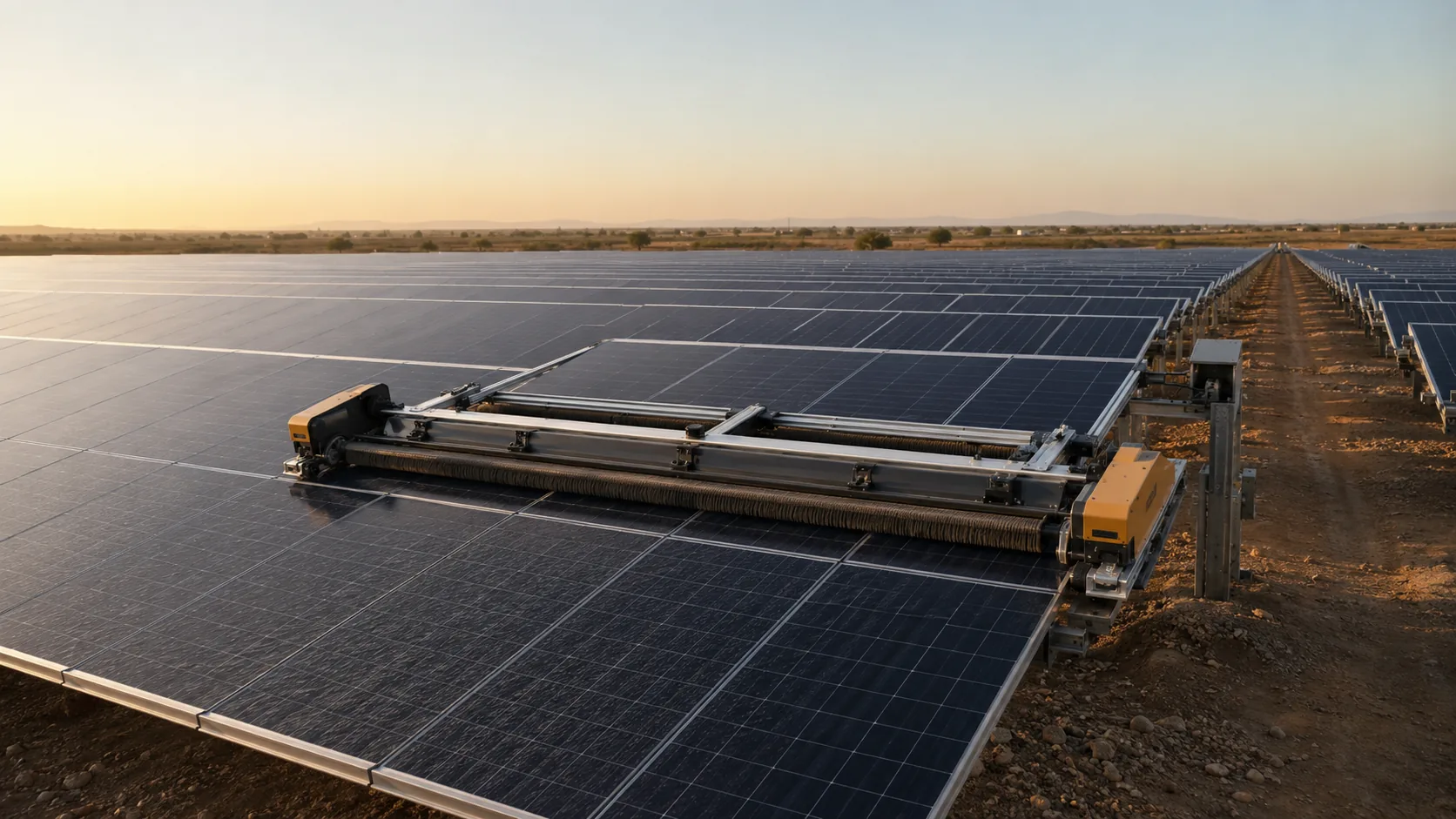
01 · Waterless cleaning platform
SR4000
One robot. Multiple rows.

02 · Waterless cleaning platform
SR2000
Every row gets its own machine.
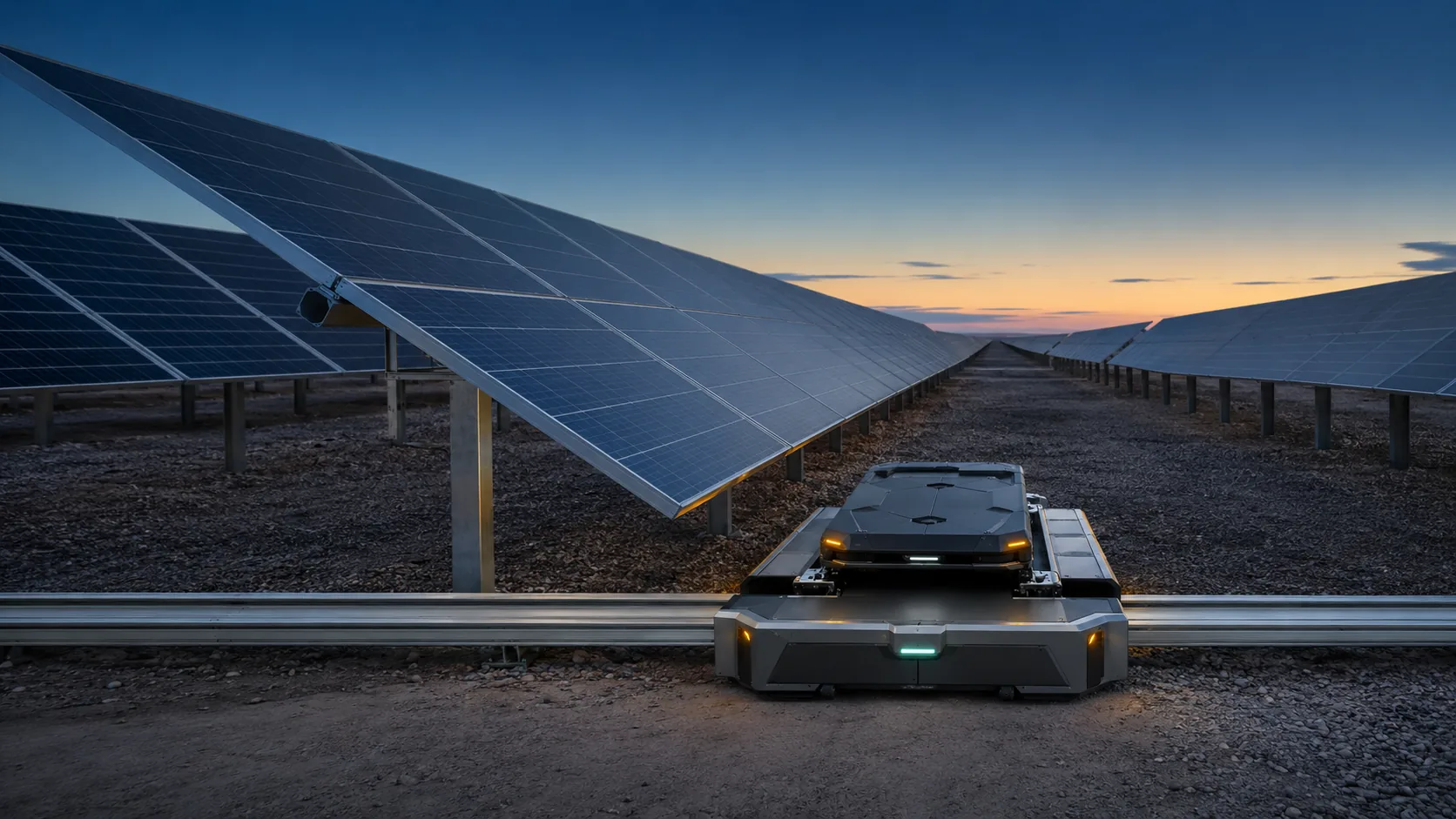
03 · Waterless cleaning platform
SR-Shuttle Link
Make one robot serve more rows.
Compare the family
Different plant geometry. Different answer.
The right platform is determined by row length, array arrangement, tilt, access and how many rows each machine must serve.
| Attribute | SR4000 | SR2000 | SR-Shuttle Link |
|---|---|---|---|
| Span | 4 m | 2 m | — |
| Deployment | Shared across multiple rows (one robot serves many rows) | Dedicated robot per row — no inter-row movement required | 5–6 rows per unit |
| Range / runtime | Swappable Li-Ion, ~3 hours continuous operation; hot-swap = no downtime | 3 km per charge (among the longest single-charge runs in its category) | 700–800 m |
| Height adjustment | Adjustable up to 100 mm — tolerates misaligned panels and uneven arrangement | — | ±250 mm |
Plant-specific engineering
The array dictates the machine.
1P and 3P module arrangements, feature additions or removals, and plant-specific engineering with the R&D team.
2,010
25
880